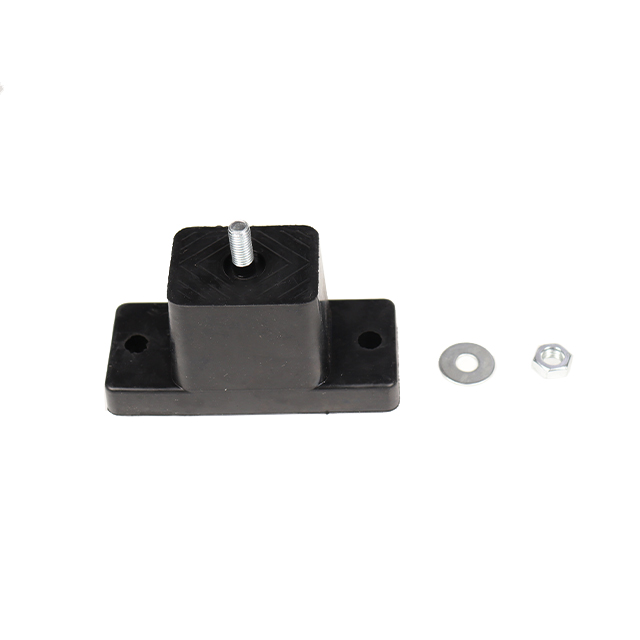
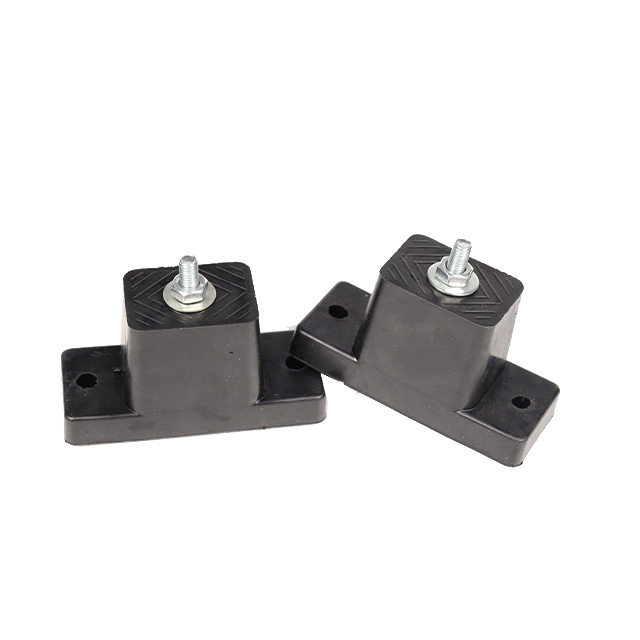
-
DABUND
-
Natural rubber + carbon black + anti-aging system
Application
Mini Split AC Rubber Vibration Isolator Mounts
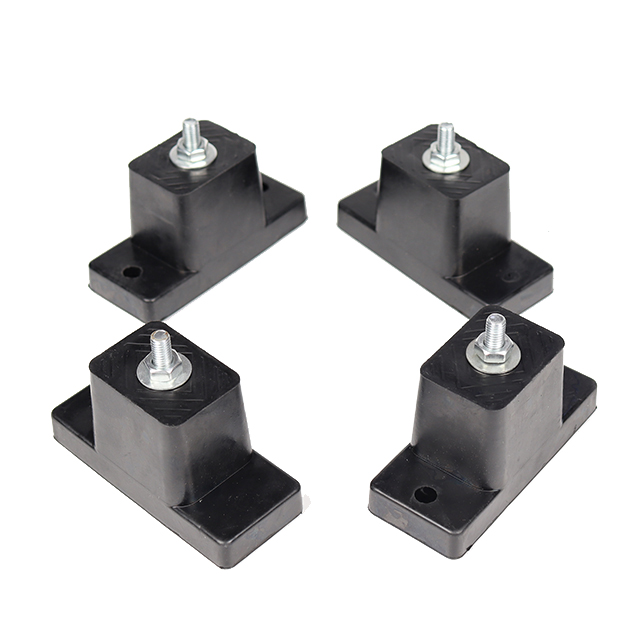
DABUND Mini Split AC Rubber Vibration Isolator Mounts are designed to provide a rubber isolation layer between compatible outdoor condenser units and the supporting surface.
The mounts help absorb vibration generated during equipment operation, reduce direct vibration transmission and help limit vibration-related structure-borne noise.
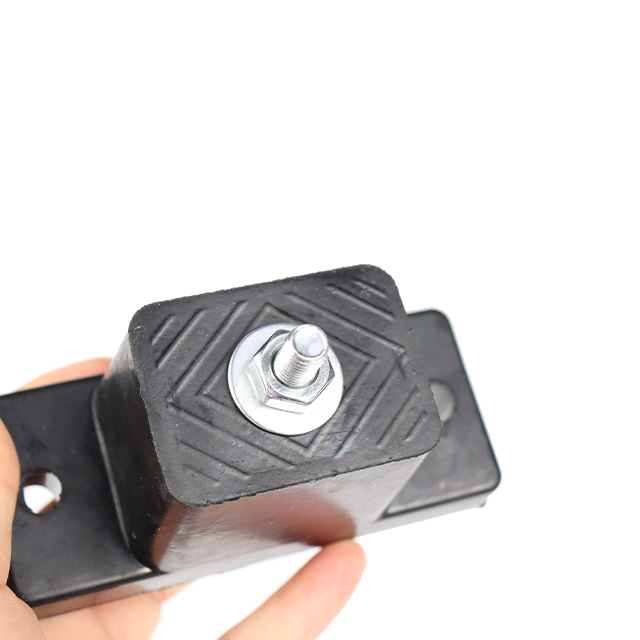
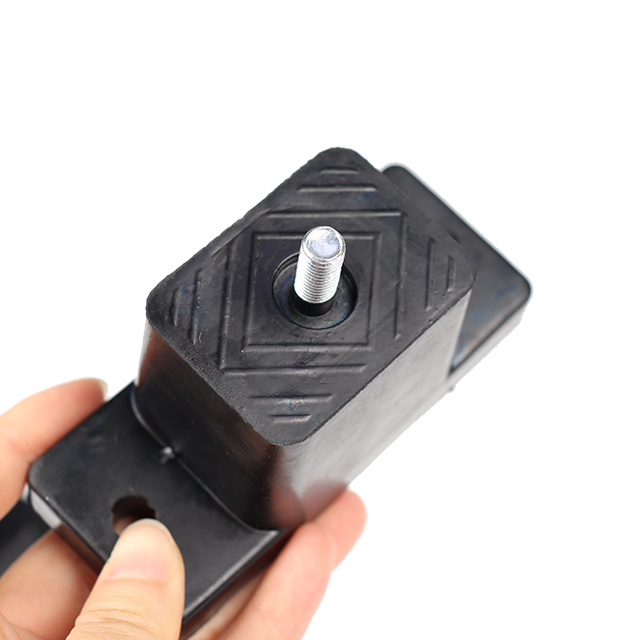
According to the current product information, the mounts use rubber contact surfaces at both the top and bottom for anti-slip performance and feature a solid, non-hollow bottom structure.
Quick Answer: These rubber vibration isolator mounts are installed beneath compatible mini split outdoor-unit legs to provide support and help isolate equipment vibration from the floor, base or mounting structure.
Selection Notice: The current product information does not provide dimensions, rubber hardness, maximum load capacity or fixing-bolt size. Confirm the outdoor-unit weight, mounting-hole arrangement and required support capacity before ordering.
Rubber Vibration Isolator Specifications
| Product Type | Mini Split AC Rubber Vibration Isolator Mount |
| Material | Rubber |
| Main Function | Vibration isolation, shock absorption and equipment support |
| Noise Control | Helps reduce vibration-related structure-borne noise |
| Anti-Slip Design | Rubber contact surfaces at top and bottom |
| Bottom Structure | Solid / non-hollow bottom according to current product information |
| Installation | Bolt-through mounting beneath compatible outdoor-unit legs |
| Installation Environment | Compatible indoor or outdoor use |
| Application | Compatible mini split air conditioner outdoor condenser units |
Rubber Isolation Between the Outdoor Unit and Mounting Surface
Mini split outdoor condensers can generate mechanical vibration through compressor and fan operation.
Installing rubber isolator mounts beneath the equipment legs creates an elastic interface between the condenser and its supporting structure.
This rubber interface is intended to reduce direct mechanical vibration transmission into a rigid floor, base or mounting structure.
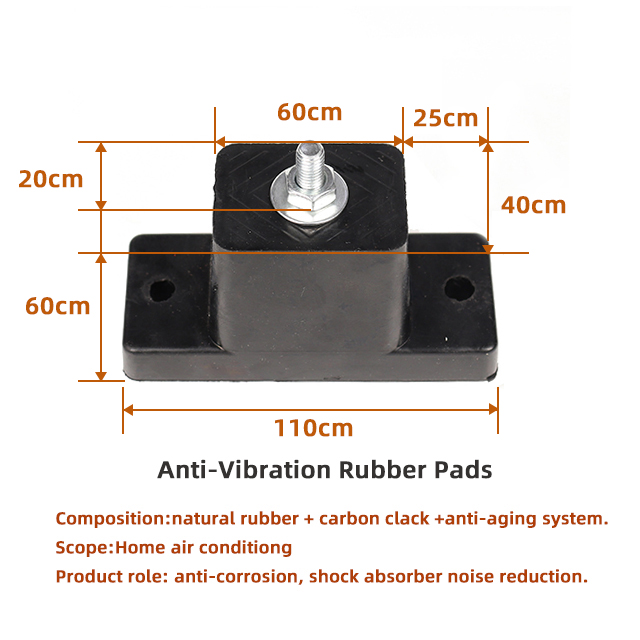
Rubber Vibration Isolator
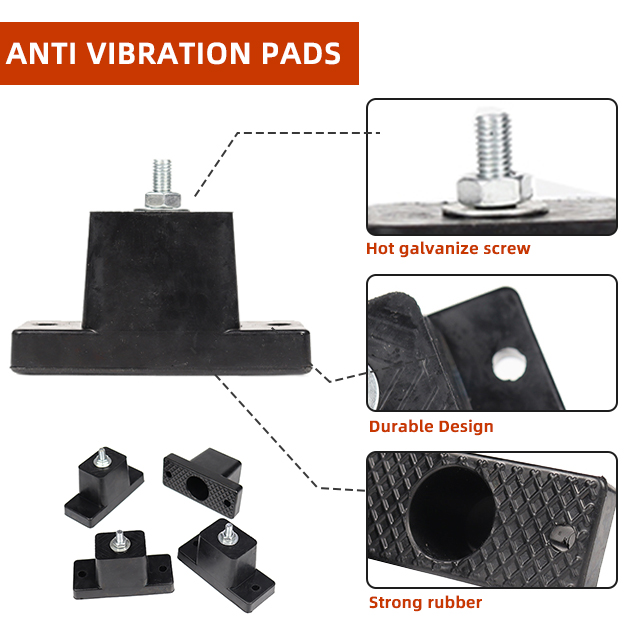
Rubber Mount Details
Vibration Isolation for Mini Split Outdoor Units
The main purpose of the rubber mount is to help isolate vibration generated by the outdoor unit from the structure supporting the equipment.
Reducing direct metal-to-structure or equipment-to-base contact can help limit the transmission of mechanical vibration.
Actual isolation performance depends on equipment weight, mounting layout, rubber characteristics, supporting surface and installation conditions.
Shock Absorption During Equipment Operation
The current product information also describes the rubber mounts as shock-absorbing pads.
The rubber layer can help cushion mechanical movement transmitted through the equipment mounting legs during compressor and fan operation.
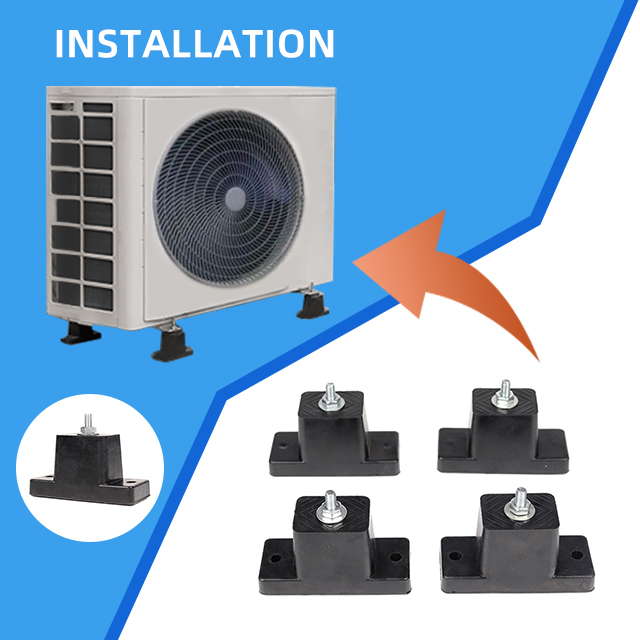
Installation
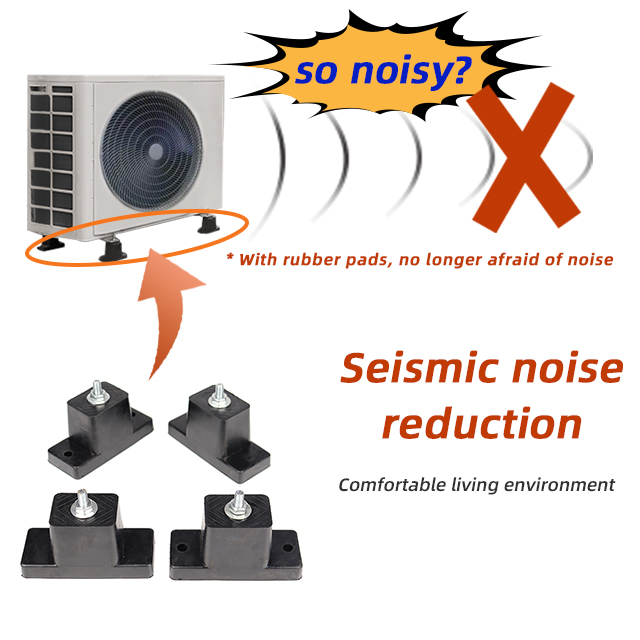
Vibration and Shock Absorption
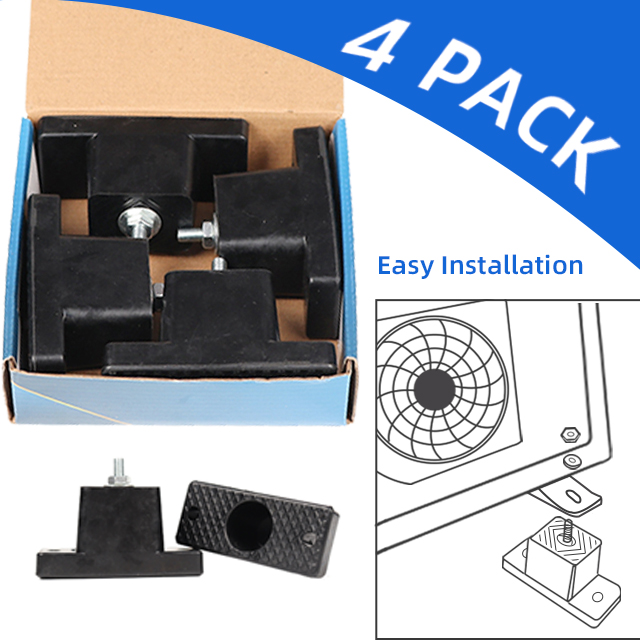
Product Package
Helps Reduce Structure-Borne Noise
Vibration transferred from an operating condenser into a rigid mounting surface can contribute to structure-borne noise.
Rubber vibration isolators help interrupt this direct vibration path and can therefore help reduce vibration-related operating noise.
The mounts do not eliminate compressor, fan or airflow noise generated directly by the air-conditioning equipment.
Anti-Slip Rubber Contact Surfaces
The current product information describes rubber contact surfaces at both the top and bottom of the mounts.
These surfaces are intended to improve contact between the condenser mounting legs, rubber isolators and supporting surface when the equipment is correctly secured.
Solid Non-Hollow Bottom Design
The current product description identifies the bottom of the rubber mount as non-hollow.
The solid-bottom configuration provides a continuous rubber contact area beneath the isolator.
Rubber Material for Indoor and Outdoor Installation
The vibration isolators are made from rubber and are described in the current product information as suitable for compatible heavy-duty indoor or outdoor use.
The source also describes the material as waterproof and moisture resistant. Exact rubber grade, hardness, operating-temperature range and weathering data are not provided.
How to Install Mini Split Rubber Vibration Isolators
Step 1: Check the Outdoor Unit
Confirm the equipment weight, number of mounting points, leg dimensions and fixing-hole positions before installation.
Step 2: Position the Rubber Isolators
Place the vibration isolator mounts beneath the compatible outdoor-unit mounting legs.
Step 3: Align the Mounting Holes
Align the isolator mounting position with the corresponding fixing hole in the outdoor-unit leg.
Step 4: Insert Suitable Screws
Pass suitable screws through the outdoor-unit mounting holes and rubber isolator arrangement.
Step 5: Secure the Nuts
Tighten compatible nuts to secure the outdoor unit and rubber mounts.
Step 6: Confirm Stability
Confirm that the outdoor unit is level, stable and securely mounted before operation.
Applications
These rubber vibration isolator mounts are intended for compatible HVAC equipment where vibration isolation and rubber support are required beneath the mounting legs.
Mini split air conditioner outdoor units
Outdoor condenser units
Compatible HVAC equipment
Condenser vibration isolation
Shock-absorbing equipment mounting
Structure-borne vibration reduction
Compatible indoor or outdoor mounting applications
Rubber Vibration Isolator vs. Direct Mounting
Direct contact between an operating outdoor condenser and a rigid support surface can allow mechanical vibration to transfer into the surrounding structure.
Rubber vibration isolators create an elastic layer between the equipment and mounting surface, helping reduce this direct vibration path.
The isolators do not replace proper structural support or mechanical anchoring. Installation should follow the outdoor-unit manufacturer's mounting requirements.
Vibration Isolator Mount vs. AC Mounting Bracket
The product shown on this page is a rubber vibration isolator mount. It is not the metal wall-mount bracket itself.
The rubber mount can be used as part of a compatible condenser installation where vibration isolation is required between the equipment mounting legs and the supporting structure.
How to Select a Mini Split Vibration Isolator
Confirm Outdoor Unit Weight
The current product information does not provide a maximum load rating. Confirm that the selected mounts can support the actual equipment weight and load distribution.
Confirm Rubber Mount Dimensions
Exact length, width and height are not provided in the current product information. Confirm the mount dimensions before purchasing.
Check Mounting-Hole Compatibility
Verify that the rubber mount and fixing arrangement match the outdoor-unit mounting holes and required hardware.
Check the Installation Surface
The supporting surface should be stable, level and capable of supporting the complete outdoor-unit mounting system.
Confirm Required Isolation Performance
For applications with defined vibration-isolation requirements, confirm rubber hardness, load characteristics and damping performance for the exact product configuration.
Information to Confirm Before Ordering
HVAC distributors, wholesalers, contractors and professional installers should confirm the following information before ordering:
Outdoor-unit total weight
Required number of vibration isolators
Rubber mount dimensions
Mounting-hole dimensions
Required fixing hardware
Indoor or outdoor application
Required quantity
Packaging requirements
OEM or private-label requirements
For HVAC Distributors and Contractors
DABUND supplies rubber vibration isolator mounts and related HVAC installation accessories for distributors, wholesalers, contractors and professional installers.
For bulk purchasing, buyers should confirm equipment weight, mount dimensions, installation arrangement, quantity and packaging requirements before placing an order.
OEM and ODM Rubber Vibration Isolators
DABUND accepts OEM and ODM requirements according to the available rubber-isolator configuration and commercial order requirements.
Logo, packaging and private-label requirements can be discussed before ordering.
Why Choose DABUND Rubber Vibration Isolators?
HVAC Parts Supply Experience Since 2008
DABUND has supplied HVAC installation products and related components since 2008 for international distributors, wholesalers and professional buyers.
Vibration Isolation
Rubber construction provides an elastic interface intended to help reduce direct mechanical vibration transfer between the outdoor unit and supporting structure.
Shock Absorption
The rubber mounts can also help cushion mechanical movement transmitted through the outdoor-unit mounting points.
Anti-Slip Contact Surfaces
Rubber contact surfaces at the top and bottom are intended to improve contact at the equipment mounting points when correctly installed.
Frequently Asked Questions
What is a mini split AC rubber vibration isolator?
It is a rubber mount installed beneath compatible outdoor-unit mounting legs to help isolate mechanical vibration from the supporting surface.
Is this product a metal mounting bracket?
No. The product shown on this page is a rubber vibration isolator mount rather than the metal wall-mount bracket itself.
What material are the vibration isolators made from?
The current product information identifies the mounts as rubber.
Do the mounts reduce vibration?
Yes. They are intended to create a rubber isolation layer that helps reduce direct vibration transmission from the outdoor unit into the mounting surface.
Can rubber vibration isolators reduce noise?
They can help reduce vibration-related structure-borne noise. They do not eliminate compressor, fan or airflow noise generated directly by the equipment.
Do the mounts absorb shock?
The current product information describes the rubber mounts as providing shock absorption in addition to vibration reduction.
Are the rubber mounts anti-slip?
The current product information describes rubber contact surfaces at both the top and bottom for anti-slip performance.
Is the bottom hollow?
No. The current product information identifies a solid, non-hollow bottom design.
Can these mounts be used outdoors?
The current product information describes them as suitable for compatible indoor and outdoor applications.
Are the mounts waterproof?
The source describes the rubber material as waterproof and moisture resistant. Exact environmental test data are not provided.
Can these isolators fit every mini split outdoor unit?
No. Compatibility depends on the outdoor-unit dimensions, mounting-hole arrangement, equipment weight and required support capacity.
What is the maximum load capacity?
A maximum load rating is not provided in the current product information. Confirm the required support capacity before ordering.
What size are the rubber vibration isolators?
Exact length, width and height are not provided in the current product information. Confirm dimensions before ordering.
How are the rubber isolator mounts installed?
Position the mounts beneath the compatible outdoor-unit legs, align the mounting holes, insert suitable screws and secure the assembly with compatible nuts.
Are screws and nuts included?
The current installation description refers to screws and nuts, but the source does not clearly confirm the exact fixing hardware included. Confirm package contents before ordering.
Can DABUND provide OEM or ODM vibration isolators?
Yes. OEM and ODM requirements can be discussed according to the available product configuration and commercial order requirements.
Can I get samples before placing a bulk order?
Sample supply is available according to the current product information. View sample information.
What payment terms are available?
Available payment methods can include T/T, L/C at sight and credit card. Final payment terms depend on the commercial agreement.
What delivery terms are available?
Available international trade terms can include EXW, FOB, CFR and CIF.
What is the typical delivery time?
Current product information lists a typical delivery period of approximately 15–20 days. Actual lead time depends on quantity, product configuration, customization and production schedule.