You are here:Home » News » Mini Split Line Set Too Long: Should You Cut It, Coil It, Or Replace It?
Mini Split Line Set Too Long: Should You Cut It, Coil It, Or Replace It?
Views: 0 Author: Site Editor Publish Time: 2026-09-18 Origin: Site
Extra copper beside a condenser may look harmless. Yet the wrong choice can create leaks, kinks, noise, or charging problems.
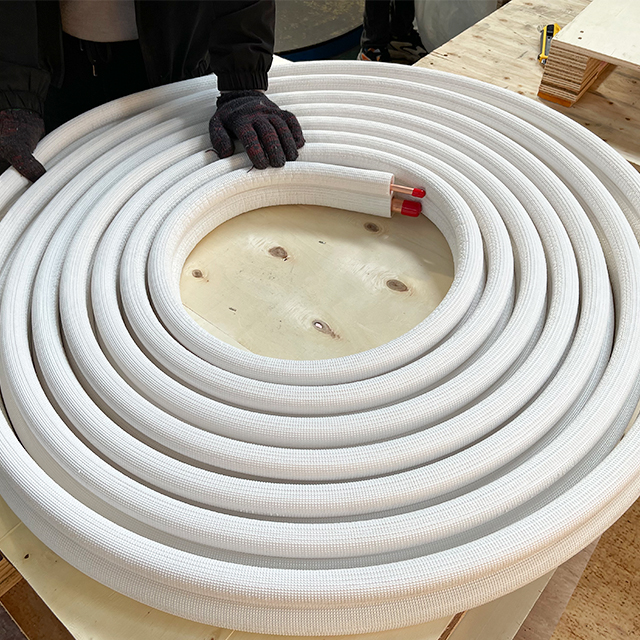
A MINI SPLIT LINE SET connects indoor and outdoor units through a liquid line and suction line. When supplied tubing exceeds the actual route, three choices appear: cut it, coil it, or replace it.
The right answer depends on line-set type, equipment limits, and refrigerant charge. This guide explains measurements, flaring, safe coiling, replacement, and testing before startup.
How to Tell Whether a Mini Split Line Set Is Actually Too Long
Extra Tubing Is Not Always Excessive Piping
First, separate unused tubing from an excessive installed run. A 25-foot kit serving a 16-foot route has nine feet left over. However, the complete 25-foot run may still fall inside the equipment limits.
A truly excessive run exceeds the manufacturer’s maximum piping length or vertical separation. That condition can affect refrigerant volume, pressure drop, oil return, and capacity. A shorter route can also cause trouble when it falls below a stated minimum.
Check Four Measurements Before Changing Anything
Measure the actual route along the tubing centerline. Include service bends, wall penetrations, and the final approach to each connection. Do not measure a straight line between the units.
Allow practical service space at both units. However, never create extra loops before checking the installation manual.
Check
What to Confirm
Why It Matters
Total piping length
Minimum and maximum limits
Keeps operation inside the tested range
Vertical separation
Indoor-to-outdoor height difference
Affects pressure and oil movement
Factory-charge allowance
Included length before added refrigerant
Prevents undercharging or overcharging
Line diameters
Liquid and suction pipe sizes
Protects capacity and refrigerant flow
Published limits vary widely. One Daikin installation manual lists a suggested 10-foot minimum. Its model-specific maximums range from 49¼ to 98½ feet. It also requires added refrigerant beyond 32.8 feet for listed models.
These figures are examples, not universal rules.
About Us - Dabund Pipe has manufactured HVAC&R parts since 2008. Its website lists customizable insulated copper line sets from 1 to 50 meters. Available tubing uses C12200 copper meeting ASTM B280, according to the company.
Those product choices help match different installation paths. They never replace the indoor and outdoor unit specifications. Record the route, height, pipe sizes, and unused length before choosing any remedy.
When Cutting a Mini Split Line Set Is the Best Choice
Cut Only Conventional, Serviceable Copper Tubing
Cutting usually suits an uncharged, conventional copper line set before the condenser service valves open. The installer can trim the tubing, prepare new flares, and connect the exact required length. This approach removes bulky loops and keeps the route clean.
Never treat a sealed, precharged quick-connect line set the same way. Cutting one releases refrigerant and destroys its factory connection. An operating system also requires recovery or an approved pump-down procedure before its circuit opens.
Use a Complete Trim-and-Reflare Process
A reliable shortened line needs more than a tubing cutter. Each preparation step protects the flare seat and keeps debris outside the refrigerant circuit.
1. Confirm the final length remains above the equipment minimum.
2. Cut squarely using a clean HVAC tubing cutter.
3. Deburr downward, preventing copper filings from entering.
4. Install the correct flare nut before making the flare.
5. Create a smooth, round flare using the specified tool.
6. Tighten each fitting to the manual’s torque value.
7. Pressure-test, evacuate, and verify the vacuum holds.
Official Daikin instructions follow this sequence: cut, deburr, fit the nut, flare, and inspect. Poor flares can crack, seat unevenly, or leak after repeated heating cycles.
Cutting does not automatically require refrigerant removal. Many condensers carry enough factory charge for a defined piping range. Other systems are charged for one exact supplied length.
When Coiling Extra Mini Split Line Set Is Acceptable
Coiling Often Fits Sealed Quick-Connect Systems
Coiling becomes practical when the line set cannot be shortened. Precharged quick-connect tubing is the clearest example. Its sealed ends and refrigerant quantity depend on the original assembly.
The manufacturer must still permit the full installed length. A coil cannot make an over-limit line acceptable. It only stores tubing already allowed by the equipment design.
Some manufacturer guidance provides couplers and fixed line lengths for quick-connect systems. For example, MRCOOL manuals publish model-specific maximum lengths and connection procedures. Follow the manual supplied for the exact indoor and outdoor units.
Form Broad, Supported Loops
When coiling is allowed, use broad horizontal loops near the outdoor unit. Keep them above soil, standing water, snow, and landscaping tools. Support the bundle without crushing the insulation.
● Maintain the specified minimum bend radius. Tight curves can flatten the suction line or kink the liquid line.
● Leave gentle service slack near the condenser. Do not let tubing weight pull on quick-connect fittings.
● Keep loops separated from sharp metal edges. Use compatible straps and a ventilated line set cover where suitable.
● Inspect every bend after shaping. Copper must remain round, while insulation stays closed and dry.
Horizontal loops are often preferred when a manual allows coiling. They reduce tall low-point patterns and usually fit behind a condenser. Never assume this layout overrides brand-specific routing instructions.
Understand the Tradeoffs of Leaving Extra Length
Every additional foot adds internal volume and some flow resistance. Large excesses may affect refrigerant charging, vibration, or oil movement. The exact impact depends on compressor design, pipe diameter, height, and operating mode.
Poorly supported coils can rub, rattle, or collect water around damaged insulation. They may also obstruct service access. A neat coil must not block condenser airflow or access to valves.
When Replacing a Mini Split Line Set Is Safer
Replace Tubing That Cannot Be Made Reliable
Replacement is safer when shortening cannot correct the underlying problem. Length alone rarely justifies waste. Damage, contamination, incompatibility, or a compromised connector usually provides a stronger reason.
Condition
Why Replacement Makes Sense
Wrong liquid or suction diameter
The system may lose capacity or return oil poorly
Route exceeds the approved limit
Coiling cannot reduce refrigerant travel distance
Kinked or flattened copper
Restricted flow can raise stress and reduce performance
Corrosion, pinholes, or cracked flares
Repairs may leave another weak section nearby
Burned, wet, or split insulation
Condensation and heat gain can continue
Contaminated tubing
Moisture, debris, or incompatible oil threatens components
Damaged precharged connector
The factory seal and refrigerant charge may be lost
Match the Replacement to the Exact Equipment
Select both diameters from the model manual, not only system capacity. Confirm refrigerant compatibility, wall thickness, approved length, insulation rating, and connection style. The replacement must also suit the measured vertical rise.
Mini Split Line Set Manufacturer offers insulated copper line sets in several diameters and configurable lengths. Its published range includes pre-flared options for shorter runs and plain-ended copper for longer projects. Installers must still match each selection to the equipment manual.
Do not reuse a removed line merely because it looks clean. Check its service history, refrigerant oil, internal contamination, wall condition, and insulation. Compressor burnout or prolonged exposure to open air raises the replacement case.
Protect New Tubing During Installation
Keep new pipe ends capped until connection time. Route each bend using the correct radius and a suitable bender. Replace torn insulation at joints using compatible vapor-tight material.
Avoid hidden joints where future leak inspection becomes difficult. Protect outdoor insulation from ultraviolet light and physical damage. A secure line set cover can improve both durability and appearance.
Cut, Coil, or Replace: A Final Mini Split Line Set Checklist
Use the Line-Set Type to Narrow the Decision
Start by identifying the tubing, then check its condition and manual limits. The following guide organizes the decision without replacing manufacturer instructions.
Situation
Usually Preferred
Main Condition
Clean conventional copper remains too long
Cut and reflare
Final length stays inside the approved range
Short excess remains on an approved run
Coil carefully
The equipment manual permits coiling
Sealed precharged quick-connect tubing
Coil or use an approved shorter assembly
Never cut a charged sealed line
Tubing is damaged, contaminated, or mismatched
Replace
New tubing matches every specification
Actual route exceeds the maximum length
Relocate or redesign
A longer line set does not solve the limit
Verify the Work Before Startup
Inspect both refrigerant lines from end to end. Look for flat bends, twisted insulation, stressed fittings, or unsupported spans. Confirm the condensate drain and communication cable follow their separate requirements.
Next, complete the testing process stated in the equipment manual. Conventional field-made connections normally require dry-nitrogen pressure testing and deep evacuation. One Daikin procedure specifies nitrogen testing, followed by evacuation to at least 500 microns.
Do not copy that pressure or vacuum time blindly. Use the values for the installed model, refrigerant, and local code. Verify flare torque using the correct wrench and manufacturer table.
Know When the Work Needs a Technician
Stop when the refrigerant circuit is charged, leaking, or outside published limits. Refrigerant recovery, charge adjustment, and advanced leak repair require proper tools and training. Local regulations may also restrict this work.
A technician should document the final line length, vertical separation, test pressure, vacuum result, and refrigerant adjustment. Keep those records beside the equipment manual. They provide useful evidence during later service or warranty review.
Conclusion
If a MINI SPLIT LINE SET is too long, the equipment manual decides the solution. Cut conventional uncharged copper when proper flaring and testing are available.
Coil only when the manufacturer permits it, especially for sealed quick-connect lines. Replace tubing when size, condition, insulation, or connection type creates risk.
Careful measurement, leak testing, and correct charging protect efficiency and service life. When the refrigerant circuit is open, use a qualified HVAC technician.
FAQs About an Excess Mini Split Line Set
Q: Can a mini split line set be too long?
A: Yes. It becomes too long when the installed route exceeds the model’s maximum piping length. It may also require added refrigerant beyond a stated threshold.
Extra tubing inside the approved range is different. Check total length, vertical separation, pipe diameters, and factory-charge allowance before making changes.
Q: Does cutting a mini split line set change the refrigerant charge?
A: Sometimes, but not automatically. Many condensers include a factory charge covering a range of piping lengths. Other systems assume one supplied length.
The installation manual gives the correct adjustment rule. A charged circuit needs qualified recovery and charging procedures before cutting.
Q: Can a precharged quick-connect line set be cut?
A: Generally, no. Cutting breaks the sealed assembly and can release refrigerant. It also removes the factory quick-connect end.
Use the complete approved length, form permitted coils, or purchase a compatible shorter assembly. Always follow the exact system manual.
Q: What is the safest way to coil extra line set?
A: Coil only when manufacturer instructions allow it. Make broad horizontal loops near the condenser, using the specified bend radius.
Keep them supported, dry, and clear of airflow. Avoid kinks, crushed insulation, sharp edges, and connector stress. Leave enough access for future service.
Q: When should a mini split line set be replaced?
A: Replace it when tubing has kinks, corrosion, pinholes, contamination, wrong diameters, or failed insulation. Replacement also suits a damaged precharged connector or incompatible refrigerant system.
If clean conventional tubing is merely long, professional trimming may be more practical.

 English
 العربية
 Français
 Русский
 Español
 Português
 Deutsch
 italiano
 日本語
日本語 한국어
한국어 Nederlands
 Tiếng Việt
 ไทย
ไทย Polski
 Türkçe
 አማርኛ
አማርኛ ພາສາລາວ
 ភាសាខ្មែរ
 Bahasa Melayu
 ဗမာစာ
ဗမာစာ Filipino
 Bahasa Indonesia
 magyar
 Română
 Čeština
 қазақ
қазақ Српски
 हिन्दी
 فارسی
فارسی Slovenčina
 Slovenščina
 Norsk
Norsk Svenska
 українська
 Ελληνικά
 Հայերեն
 Latine
 Dansk
Dansk Shqip
Shqip বাংলা
বাংলা Hrvatski
 Afrikaans
 Gaeilge
 latviešu
 Беларуская мова
 Български
 Esperanto
 Basa Jawa
 Kinyarwanda
 Soomaali
 Cymraeg