You are here:Home » News » AC Installation Kit Buying Guide: Line Set, Drain Hose, Wire, Wall Sleeve, And Tape Explained
AC Installation Kit Buying Guide: Line Set, Drain Hose, Wire, Wall Sleeve, And Tape Explained
Views: 0 Author: Site Editor Publish Time: 2026-09-24 Origin: Site
An AC installation kit may look complete, yet one mismatched part can delay the entire project.
The copper line size, drain hose, wire, and wall accessories must fit the selected air conditioner. Length alone is never enough.
This guide explains every major component inside an AC installation kit. It also shows how to compare materials, sizes, compatibility, and missing accessories before purchasing.
What Should a Complete AC Installation Kit Include?
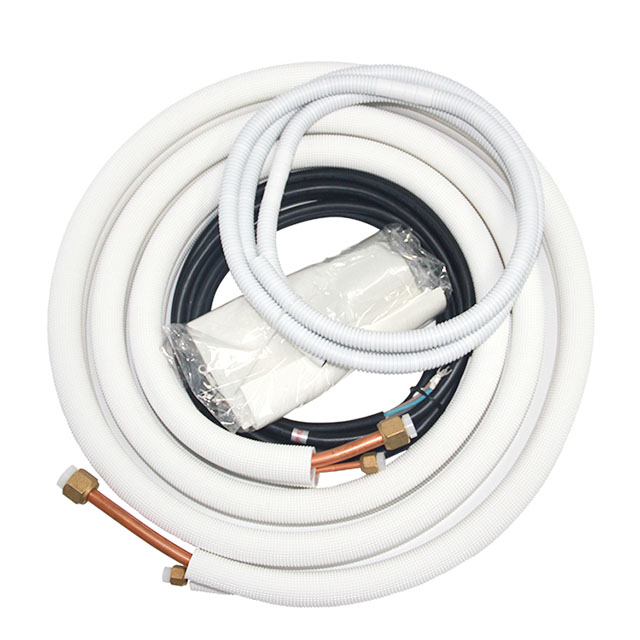
An AC installation kit contains the materials connecting an indoor air handler to an outdoor condenser. It is often called a mini split installation kit, AC line set kit, or HVAC installation kit.
However, “complete” does not mean the package contains an air conditioner or every installation tool. It usually means the main connecting materials are supplied together.
Component
Primary purpose
Details to check
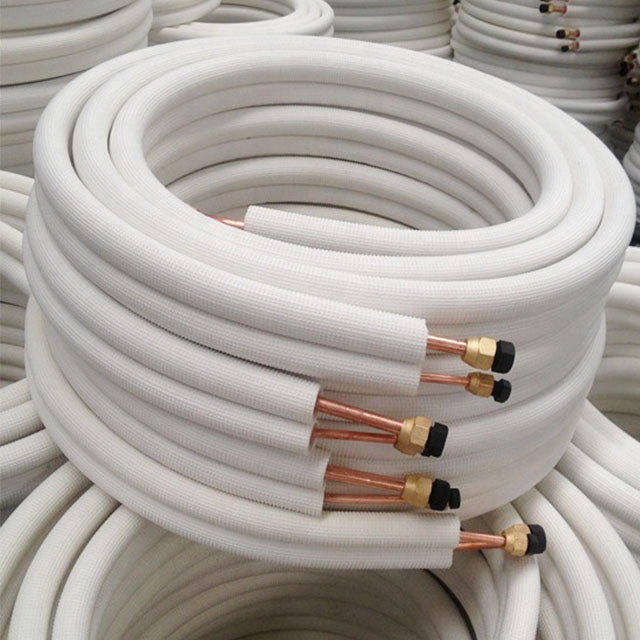
Pre-insulated copper line set
Circulates refrigerant between both units
Pipe diameters, length, copper grade, insulation, and flare type
Communication or control wire
Connects electrical terminals between units
Wire gauge, conductor count, voltage rating, and length
Condensate drain hose
Removes water produced by the indoor unit
Diameter, length, flexibility, and kink resistance
Wall sleeve and cap
Protects pipes passing through the wall
Opening diameter, wall thickness, and weather protection
Wrapping tape
Bundles pipes, wire, and drain hose
UV resistance, width, length, and adhesive type
Sealing putty
Seals gaps around the wall penetration
Outdoor durability, flexibility, and moisture resistance
Flare nuts
Connect copper tubes to service valves
Thread size, material, and equipment compatibility
Some kits also include cable ties, pipe clamps, decorative covers, or small fasteners. Buyers should check the product list instead of relying on the word “complete.”
An outdoor mounting bracket, condenser pad, disconnect box, electrical whip, circuit breaker, and surge protector may require separate purchases. A condensate pump is also needed when gravity drainage is impossible.
The Dabund Pipe combines insulated copper pipes, control wire, drain hose, wall accessories, and sealing materials. DABUND has produced HVAC parts since 2008, supporting residential and light commercial installation requirements.
Before ordering, compare every included component against the air conditioner’s installation manual. This quick check prevents mismatched pipes, short wires, and incomplete wall-finishing materials.
Line Set Selection: Size, Length, Copper, and Insulation
The line set is the most important part of an AC installation kit. It contains two copper tubes carrying refrigerant between the indoor and outdoor units.
The smaller tube normally serves as the liquid line. The larger tube works as the suction or gas line. Both diameters must match the connection sizes stated by the equipment manufacturer.
Match Both Pipe Diameters
BTU capacity can provide an initial reference, but it cannot confirm line set size alone. Different systems sharing the same cooling capacity may require different pipe combinations.
Check the following information before choosing an insulated copper line set:
● The liquid-line outside diameter
● The suction-line outside diameter
● The specified flare nut sizes
● The permitted minimum and maximum pipe length
● The maximum vertical height difference
● The refrigerant adjustment required for longer routes
Common paired sizes include 1/4 × 3/8, 1/4 × 1/2, 1/4 × 5/8, and 3/8 × 5/8 inches. These examples are not universal sizing rules.
Measure the Actual Installation Route
Measure every horizontal section, vertical rise, bend, and wall passage. Add a small service allowance near each unit, but avoid excessive unused tubing.
A line set that is too short cannot safely reach both connections. An unnecessarily long line may require extra refrigerant or create difficult routing.
Never assume the factory refrigerant charge covers every line length. The equipment manual normally states the included allowance and additional charge requirements.
Check Copper and Insulation Quality
Refrigeration tubing should be clean, seamless, pressure-ready, and protected from contamination. Factory-installed insulation reduces field labor and helps control condensation.
DABUND manufactures line sets using 99.9% C12200 copper meeting ASTM B280 requirements. Its available sizes range from 1/4 to 1-1/8 inches, while customizable lengths extend from 1 to 50 meters. White PE and black rubber insulation options support different installation environments.
Pre-flared ends can shorten preparation time. However, a pre-flared line set is not automatically precharged. Quick-connect systems require their own approved fittings and model-specific line sets.
Drain Hose and Communication Wire Buying Requirements
The condensate drain hose and communication wire often follow the same route as the copper tubing. They perform completely different jobs, so each component needs a separate compatibility check.
Choosing the Condensate Drain Hose
The drain hose carries moisture away from the indoor evaporator. Its connector diameter must fit the indoor unit’s drain outlet or approved adapter.
Select a hose long enough to reach a safe discharge point. It should resist crushing and kinking when passing through the wall sleeve or line set cover.
Gravity drainage requires a continuous downward route. Upward loops, pinched sections, and deep sags can trap water and cause leaks, odors, or indoor wall damage.
Keep the drain hose near the bottom of the bundled installation materials. This position supports proper drainage and makes the route easier to inspect.
A condensate pump may be necessary when the indoor unit sits below the available discharge point. Pumps are usually sold separately from a standard AC installation kit.
Matching the Communication Wire
Mini split wire requirements vary significantly between models. Some systems use the interconnecting cable for communication only. Others also carry power between the outdoor and indoor units.
A kit wire should match every specification below:
Requirement
Why it matters
Conductor count
Must match the numbered equipment terminals
Wire gauge
Prevents overheating and excessive voltage drop
Voltage rating
Supports the electrical design safely
Cable length
Must reach both units without hidden splices
Insulation rating
Protects the cable in outdoor or damp locations
Code compliance
Meets regional electrical and installation rules
Four-conductor cable is common in many mini split installation kits, but it is not universal. Never select wire only because another system uses the same BTU capacity.
The cable should be at least as long as the installation route, plus termination allowance. Numbered terminals must match at both units.
High-voltage connections and refrigerant work involve serious hazards. Local codes may require licensed HVAC technicians or electricians, as explained in this installation safety guidance.
Wall Sleeve, Tape, Putty, and Protective Covers Explained
Small wall-finishing accessories often decide whether an installation looks professional and remains weather-resistant. They protect the service bundle where it passes through the building envelope.
Wall Sleeve and Protective Cap
A wall passage sleeve creates a smooth channel for copper tubing, cable, and drain hose. It prevents rough masonry, metal edges, or wooden framing from damaging these components.
Check the sleeve diameter against the complete bundle. Thick insulation and large suction lines require more clearance than a basic 1/4 × 3/8-inch AC line set kit.
The sleeve must also suit the wall thickness. The opening should slope slightly toward the exterior when gravity drainage passes through it.
An exterior cap improves appearance and covers the sleeve edge. It should not pinch the drain hose or compress the line set insulation.
Wrapping Tape and Insulation Tape
Non-adhesive wrapping tape keeps the refrigerant pipes, cable, and drain hose organized. Installers overlap each pass to create a firm service bundle.
This tape should resist moisture and outdoor exposure. Ordinary indoor tape can loosen, crack, or leave adhesive residue after prolonged heat and sunlight.
Foam insulation tape serves another purpose. It seals exposed flare connections and insulation joints, reducing condensation around cold refrigerant components.
Wrapping tape cannot replace damaged line insulation. It also provides less mechanical protection than a rigid PVC line set cover.
Sealing Putty and Exterior Protection
Sealing putty closes small spaces around the wall sleeve and service bundle. A proper seal limits water entry, outside air, dust, and pests.
Apply sealing material without blocking condensate drainage. Outdoor penetrations may also need a code-approved weather sealant suitable for the wall surface.
A decorative line set cover is worth considering when the bundle remains exposed. It protects insulation, improves appearance, and provides easier service access than heavy layers of tape.
Before purchasing, confirm whether the AC installation kit contains a sleeve, exterior cap, putty, wrapping tape, and insulation tape. Product photos may show accessories that are not included.
How to Choose the Right AC Installation Kit
The best AC installation kit is not simply the largest package. It is the kit whose line set, wire, drainage components, and wall accessories match one specific installation.
Follow a Model-First Buying Process
Start with the exact indoor and outdoor unit model numbers. Then locate the manufacturer’s installation manual and record the required connection details.
Use this buying sequence:
1. Confirm the liquid and suction line diameters.
2. Check the required flare or quick-connect design.
3. Measure the complete indoor-to-outdoor route.
4. Review minimum and maximum line lengths.
5. Confirm the communication wire gauge and conductor count.
6. Match the drain hose to the indoor outlet.
7. Measure the wall thickness and service-bundle diameter.
8. Check which electrical and mounting parts are excluded.
Do not purchase by BTU rating alone. Capacity helps narrow the options, but the installation manual remains the final reference.
Compare Kit Quality, Not Only Part Count
A long accessory list has little value when the main components are unsuitable. Focus on refrigeration-grade copper, continuous insulation, clean tube interiors, secure packaging, and correctly sized flare nuts.
The drain hose should remain open after bending. The communication cable should display its electrical specifications clearly. Wall accessories should suit outdoor exposure.
For distributors, contractors, and private-label buyers, consistency across bulk orders matters too. DABUND provides OEM and ODM support for AC installation kits, custom line set lengths, insulation options, and packaging. Its one-stop HVAC&R supply range also covers brackets, line set covers, condenser pads, and other installation accessories.
Check What Must Be Purchased Separately
A basic mini split installation kit usually does not include specialized tools. Installers may still need a torque wrench, tubing cutter, flaring tool, vacuum pump, micron gauge, nitrogen regulator, and leak-testing equipment.
System hardware may also be separate. Examples include the mounting bracket, condenser pad, disconnect switch, electrical whip, breaker, surge protector, and condensate pump.
Create a final parts checklist before placing the order. It prevents repeat purchasing and keeps the installation schedule predictable.
Conclusion
A dependable AC installation kit starts with equipment compatibility, not package size.
Match the copper line diameters, route length, wire specifications, drain connection, and wall accessories to the installation manual. Then verify every included and excluded item.
Careful selection reduces delays, water leaks, wiring problems, and damaged insulation. It also creates a cleaner, safer, and more reliable mini split installation.
FAQs About AC Installation Kits
Q: Are AC installation kits universal?
A: No. Line set diameters, flare connections, wire requirements, drain outlets, and allowable lengths vary by model. Two systems with the same BTU rating may need different components. Always compare the complete kit specifications against the indoor and outdoor unit installation manual.
Q: What size line set is needed for a mini split?
A: The correct size is the paired liquid and suction line diameter specified by the manufacturer. Common combinations include 1/4 × 3/8 and 1/4 × 1/2 inches. However, BTU capacity alone cannot confirm the correct pairing.
Q: Is a pre-flared line set the same as a precharged line set?
A: No. Pre-flared means the tube ends already have prepared flare connections and nuts. Precharged means the assembly contains refrigerant. Conventional pre-flared copper line sets usually require evacuation, leak testing, and model-specific commissioning.
Q: How long should an AC installation kit be?
A: Measure the complete route between both units, including bends, vertical sections, wall thickness, and service allowance. The selected length must remain within the system’s permitted range. Longer routes may require additional refrigerant according to the equipment manual.
Q: What tape is used in a mini split installation kit?
A: Non-adhesive wrapping tape bundles the line set, wire, and drain hose. Foam insulation tape seals exposed insulation joints and flare areas. Neither product provides the same protection as a rigid, UV-resistant line set cover.
Q: What is usually not included in an AC installation kit?
A: Common exclusions include the air conditioner, outdoor bracket, condenser pad, disconnect box, breaker, electrical whip, surge protector, condensate pump, refrigerant tools, vacuum pump, nitrogen equipment, and decorative line set cover. Contents vary, so review the supplier’s packing list carefully.

 English
 العربية
 Français
 Русский
 Español
 Português
 Deutsch
 italiano
 日本語
日本語 한국어
한국어 Nederlands
 Tiếng Việt
 ไทย
ไทย Polski
 Türkçe
 አማርኛ
አማርኛ ພາສາລາວ
 ភាសាខ្មែរ
 Bahasa Melayu
 ဗမာစာ
ဗမာစာ Filipino
 Bahasa Indonesia
 magyar
 Română
 Čeština
 қазақ
қазақ Српски
 हिन्दी
 فارسی
فارسی Slovenčina
 Slovenščina
 Norsk
Norsk Svenska
 українська
 Ελληνικά
 Հայերեն
 Latine
 Dansk
Dansk Shqip
Shqip বাংলা
বাংলা Hrvatski
 Afrikaans
 Gaeilge
 latviešu
 Беларуская мова
 Български
 Esperanto
 Basa Jawa
 Kinyarwanda
 Soomaali
 Cymraeg